#1
Drowning is the leading cause of death for children ages 1–4. It’s also preventable.
Source: CDCBecause of ADAM · Allies in the Drowning Awareness Movement
Drowning is the #1 cause of death for children ages 1–4. It happens in seconds, often with adults nearby, and it’s preventable. Because of Adam, we’re helping families put layers of protection between little ones and the water.
#1
Drowning is the leading cause of death for children ages 1–4. It’s also preventable.
Source: CDC7
For every child lost to drowning, 7 more survive one and need emergency care. Kids like Adam.
Source: CDC70%+
More than 7 in 10 fatal child pool drownings happen at a home: their own, a grandparent’s, a friend’s or a neighbor’s.
Source: CPSC, 2026 report83%
Lower odds of drowning when a pool is fenced on all four sides instead of three. Layers work.
Source: Cochrane reviewIt can happen in a bathtub, a bucket, a backyard pond, a toilet, a hot tub, a pool in January, a cooler of melted ice, a drainage ditch, the bayou. It can happen in seconds.
Drowning is silent and unforgiving. It takes seconds and as little as an inch or two of water, and it doesn’t wait for swim season. Any water a little one can reach needs a layer of protection.
Most child drownings inside the home happen in the bathtub, usually during a quick break in supervision. For babies under 1, it’s the most common place of all.
What helps: Stay within arm’s reach until bath time is over. If you have to step away, even for a second, take the baby with you.
Buckets, toilets, coolers of melted ice, kiddie pools and the puddle on top of a pool cover. A toddler can drown in as little as an inch or two of water.
What helps: Empty buckets, coolers and kiddie pools right after you use them, and put latches on toilet lids.
Source: American Academy of Pediatrics
Kids wake up early, sleepwalk and wander. Children with autism are about 160 times as likely as other kids to die from drowning, often after wandering away.
What helps: Keep doors to the water locked and alarmed at night too, latch the pool gate every time, and make a wandering plan if your child has autism.
Kids who fall in aren’t dressed to swim. Jeans, boots and a heavy coat soak up water fast, and water colder than 70°F can make anyone gasp and lose control of their breathing.
What helps: Self-rescue lessons like ISR have kids practice floating in their clothes and shoes, because that’s how it really happens.
About ISR lessons →Pool drownings peak in summer, but bathtubs, hot tubs, ponds and covered pools don’t take the winter off. Rain and snowmelt collect on pool covers, and pond ice can look solid when it isn’t.
What helps: Keep the fence and gate locked all year, use a certified safety cover and pump the water off it, and keep kids off the ice.
Source: CPSC, 2026 report
Holidays, birthday parties, a house full of company. When everyone is watching, no one is. Adam slipped out during a week full of family celebrations.
What helps: Name a Water Watcher any time kids and water are together, and check that doors, gates and alarms are still set when the company leaves.
Take the Water Watcher pledge →“A pool, a bathtub, a pond, the bayou, and even a bucket.”
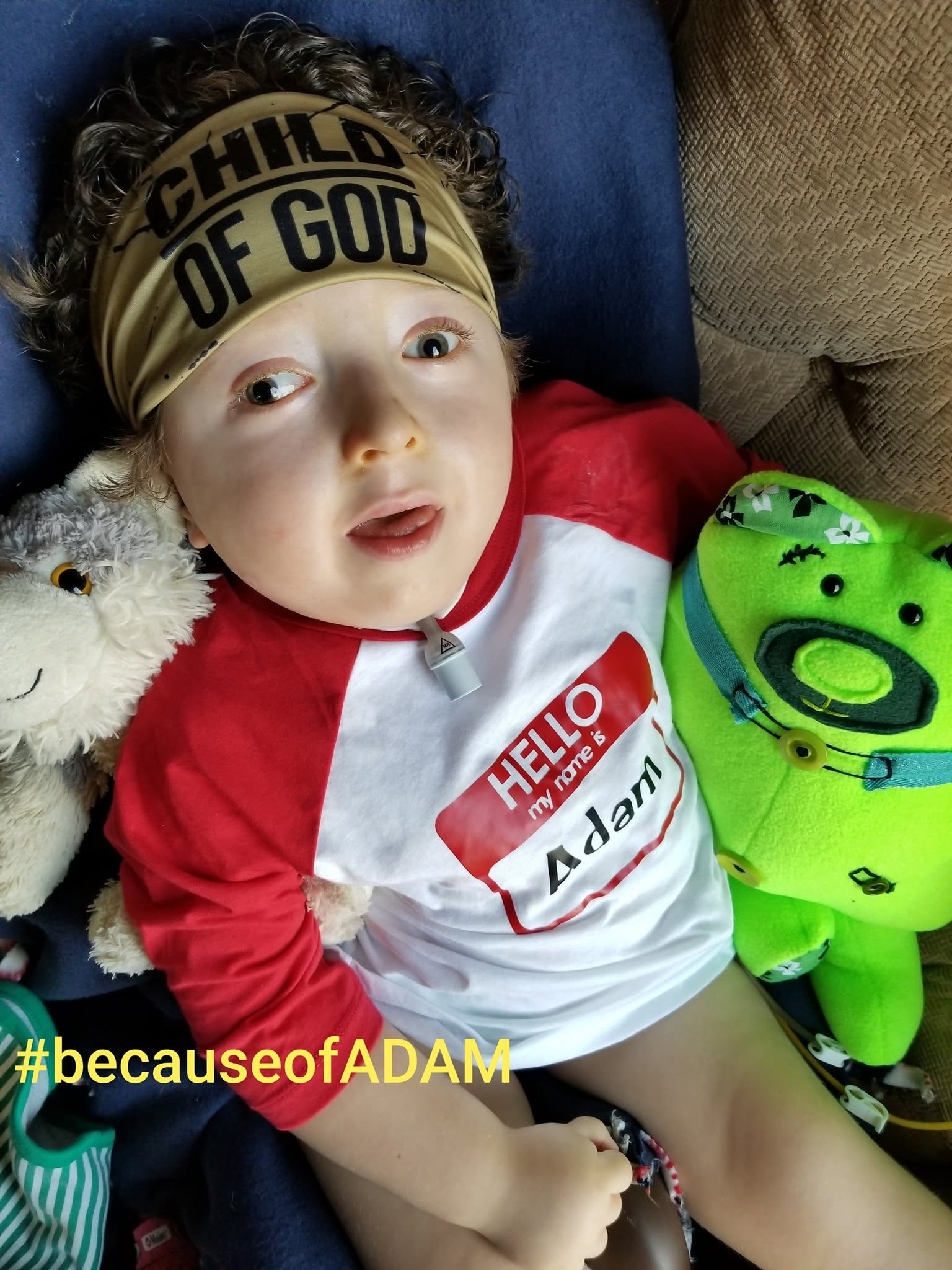
Adam is our little brother, the youngest of five, a music lover with a smile worth waiting for. At 14 months old, during a busy week of family celebrations, he slipped quietly out the kitchen door and into our backyard pool. After 90 minutes without a pulse, his heart started beating again. He’s been defying the odds ever since.
Adam is a drowning survivor and the reason we do all of this. His big brother and sisters (that’s us) started Because of ADAM in 2020 so other families could learn what we learned, without having to learn it the way we did.
You’ve been on this page for
Adam was out of sight for about three minutes.
“It only takes a second.”
Our mom and dad
It only takes a second to latch a gate, switch on an alarm, or put down the phone, too.
Alarms get switched off. Gates get propped open. Adults look away. Each layer you add catches what the last one misses. Turn them on and see the difference.
0 of 6 layers. Nothing stands between a curious toddler and the water.
One adult, eyes on the water, no distractions.
Learn more →A fence that separates the pool from the house and yard.
Learn more →Door, gate and pool alarms buy you seconds.
Learn more →Safety covers, empty buckets, safe drains.
Learn more →Water competency for every age.
Learn more →U.S. Coast Guard-approved, fitted and fastened.
Learn more →Learn CPR, keep a phone close, check the water first.
Learn more →Check the water first. Every second counts.
The full guide →Our dad became a certified Infant Swimming Resource (ISR) instructor after Adam drowned. ISR teaches babies and toddlers to roll onto their backs, float and breathe if they ever end up in the water alone, the lessons Adam never got the chance to take.
Why this is personal
Adam’s nearest ISR instructor was two hours away.
After Adam drowned, our dad became one, so families near us wouldn’t have to make that drive.
“Skills before thrills. Sometimes there are no do-overs.”
For every child lost to drowning, seven more survive one. Some, like Adam, come home with injuries that change everything, and families who need a village around them. We want every one of them to know they’re not alone.
~40%
Nearly 4 in 10 drownings treated in emergency departments need hospital admission or transfer for more care, about 4 times the rate for all unintentional injuries.
Source: CDCEvery one brings Adam’s village together and puts water safety in front of families who need it.
Duncansville, PA
A double-elimination social tournament during Duncansville Community Days. Registration at 3, bags flying at 4, cash prizes for the top two teams, and a whole lot of awareness to end childhood drowning.
Jean Lafitte, Louisiana
Our family and our hometown of Jean Lafitte threw a fishing rodeo for Adam, with shirts, trophies, raffles, auctions, music and food, all donated. It paid for his first stem cell treatment at Duke. It came before Because of ADAM, and it showed us what a village can do.
#WereTheVillage
Everywhere
On the anniversary of Adam's drowning, we wear blue for his hope and his strength, and share one water safety tip. Post yours with #WearBlueJune5th.
Thousands of people follow Adam’s journey on Facebook. It’s where we share his milestones, our events, and water safety reminders all year long.
Don’t see our posts? Some browsers block Facebook. Open our Facebook page.
When everyone is watching, no one is. Promise to name one adult whose only job is to watch the water, and print your Water Watcher card.
Promise to be a Water Watcher, print your card, and ask your family to do the same.
Take the pledge →Ready-to-post messages that put water safety in front of the people you love.
Get the toolkit →Schools, daycares, churches and community groups: we’ll share Adam’s story and the layers of protection.
Request a talk →